

Google Ads in AI Mode
My RoleInteraction design for sponsored experiences inside Google Search's AI Mode, where answers replaced links and advertising had to learn to converse.
Ads that answer
For twenty-five years, a search was a list of doors. You asked, Google pointed, you chose one and left. AI Mode ends that arrangement. Now Google answers the question itself, cites its sources, and asks what you'd like to know next. On a surface with 1 billion+ monthly users, where roughly 9 in 10 sessions end without a single click out, the oldest deal in digital advertising, pay to be the door people choose, quietly stopped making sense. This case study is my reading of what replaces it.
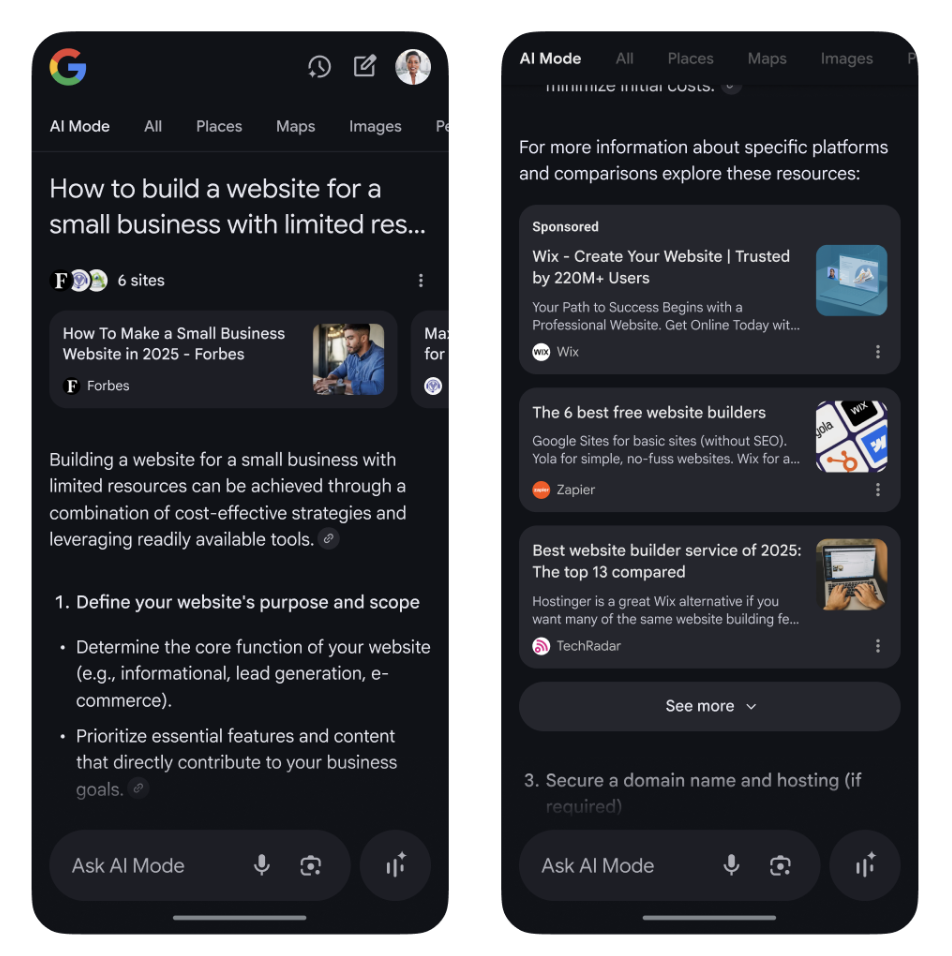
One note before we begin, because it matters here more than anywhere else in my portfolio: I design on this surface every day, and everything on this page is drawn from public captures and public announcements. Nothing internal appears. The formats are Google's; the reading of them is mine. Discretion is part of the work.
The Hardest Brief in Advertising
Asking a question is the most human way to want something. It's the moment before a decision, when intent is at its most honest, and it's exactly the moment AI Mode now owns. Placing advertising inside that moment is the hardest brief in the industry right now, because the answer is a fragile thing. Interrupt it and you break the product. Blend in too well and you break the trust. Every sponsored experience on this surface lives on three tensions, and getting any one of them wrong loses the user, the advertiser, or both.
Native vs. Transparent: The ad should read as part of the answer, and never pretend to be one. Labeling isn't a compliance checkbox here; it's the trust system the entire surface runs on.
Relevant vs. Present: In a conversation, an ad earns its place by answering the question. Interruption is the one pattern that cannot survive.
Generated vs. Controlled: When a model assembles the creative in real time, quality can't be reviewed by hand. The quality bar has to be designed into the system itself.
The Vision: An Ad That Earns Its Place
The mission isn't to place ads near answers. It's to design ads that behave like answers: relevant enough to complete the user's thought, honest enough to declare what they are, and crafted enough that the conversation feels enriched rather than sold to. When it works, the ad isn't the thing you tolerate on the way to what you wanted. It's the next sentence of what you were already asking.
The Principles I Design By
A surface this new needs more than mocks; it needs doctrine. These are the five principles I hold my own work to, written so they'd travel: portable to any conversational surface, and usable by a team without me in the room.
-
If the ad can't stand as a partial answer to what was actually asked, it doesn't belong in the conversation. Relevance isn't targeting anymore; it's admission.
-
Transparency comes first, native craft second. An ad may borrow the answer's grammar only after it has plainly said what it is. Reverse the order and you spend the surface's trust to buy one impression.
-
Inside an answer, placement is a claim the content has to back up. The design question stops being where the ad sits and becomes whether it deserves to.
-
When creative is generated per query, no human reviews every output. The craft object is the system: the principles, constraints, and evaluations that hold the quality bar at machine scale.
-
The session is the asset. Any format that taxes the user's next question costs the surface more than the impression earns. Sustainable advertising here is measured in continued conversations, not interruptions survived.
How an answer becomes a business.
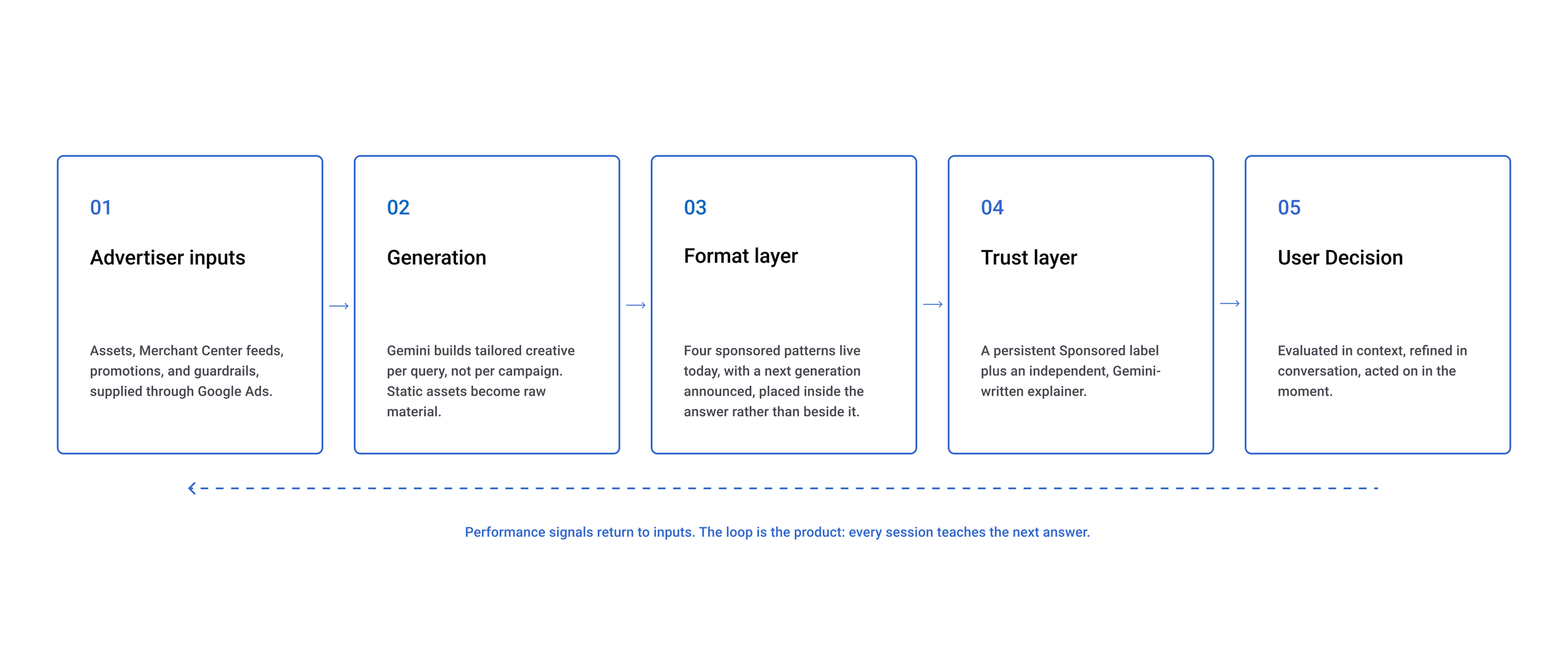
Understanding this surface means following the value all the way around the loop, from advertiser input to user decision and back. Synthesized entirely from public announcements, the system reads like this:
And then the part that makes it a flywheel: performance signals return to inputs. The loop is the product. Every session teaches the next answer.
One page, whole system. Product sees the pipeline. Sales sees the story. Leadership sees the loop. This is the artifact that aligns a room before a single mock is opened.
Reading a Live Placement
Theory is cheap; surfaces are honest. So I did what I always do with a format I want to understand: I asked the product a real question and read what came back. The query was simple, "What do I need for the perfect movie night at home?", and the answer arrived with a sponsored unit that demonstrates nearly everything this case study argues. Here is that capture, read closely.
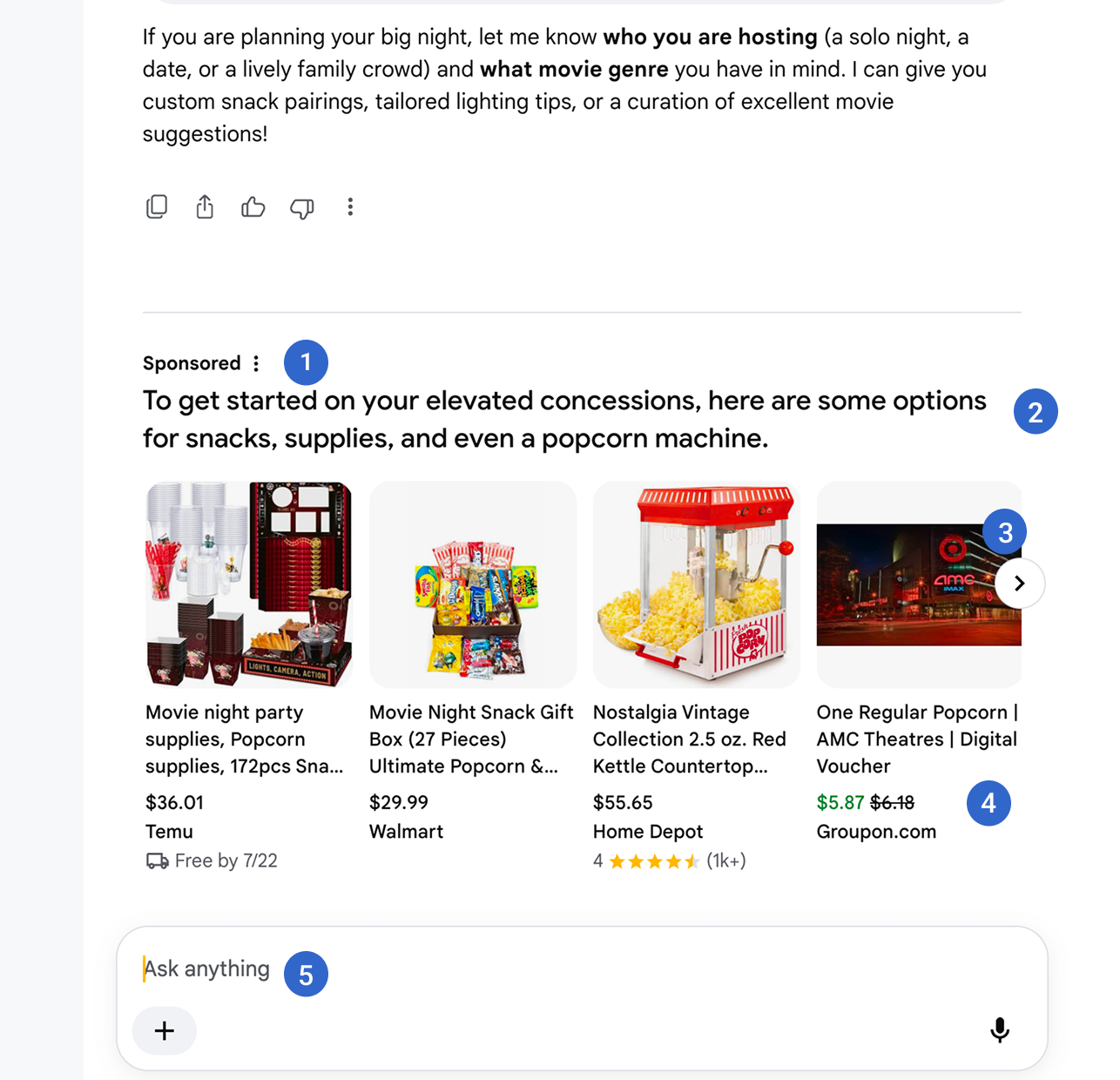
1 — Sponsored, said plainly. The label leads the unit, persistent and unambiguous. Trust stays intact, and trusted engagement is the only kind worth paying for.
2 — The headline speaks the conversation's language. "Elevated concessions" is the answer's own phrase. The ad reads as the next sentence of the conversation, not an interruption of it.
3 — Entertainment is already buying in. An AMC Theatres popcorn voucher sits inside a movie night answer. The at-home viewing moment is already an ad category here, and entertainment brands know it.
4 — The unit carries the whole decision. Price, seller, rating, and delivery date arrive together, from Temu to Home Depot. Evaluation ends where intent began: full funnel inside a single answer.
5 — The conversation keeps going. The unit sits between a finished answer and the persistent ask bar. Presence without interruption is what keeps the surface, and the spend, sustainable.
Live capture from Google AI Mode on a personal account, July 2026.
Where It's Heading: From Answer to Agent
The formats announced at Google Marketing Live 2026 push the same logic further, and read together, they trace a trajectory: the ad is learning to answer, then to converse, then to close.
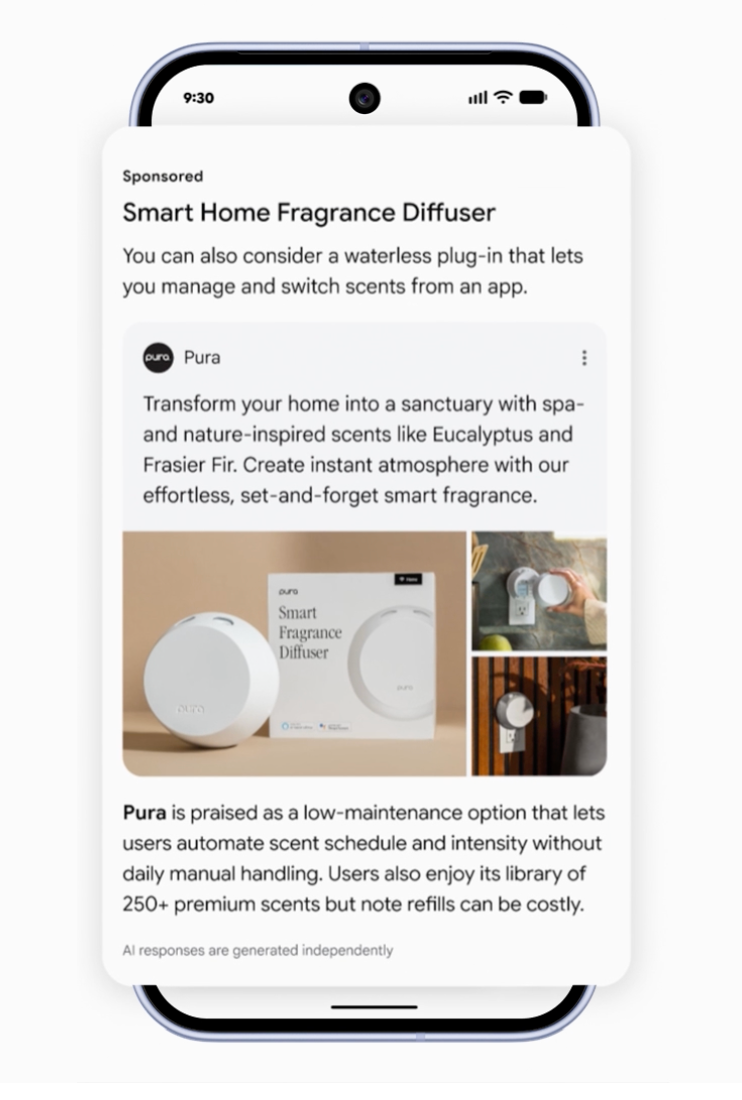
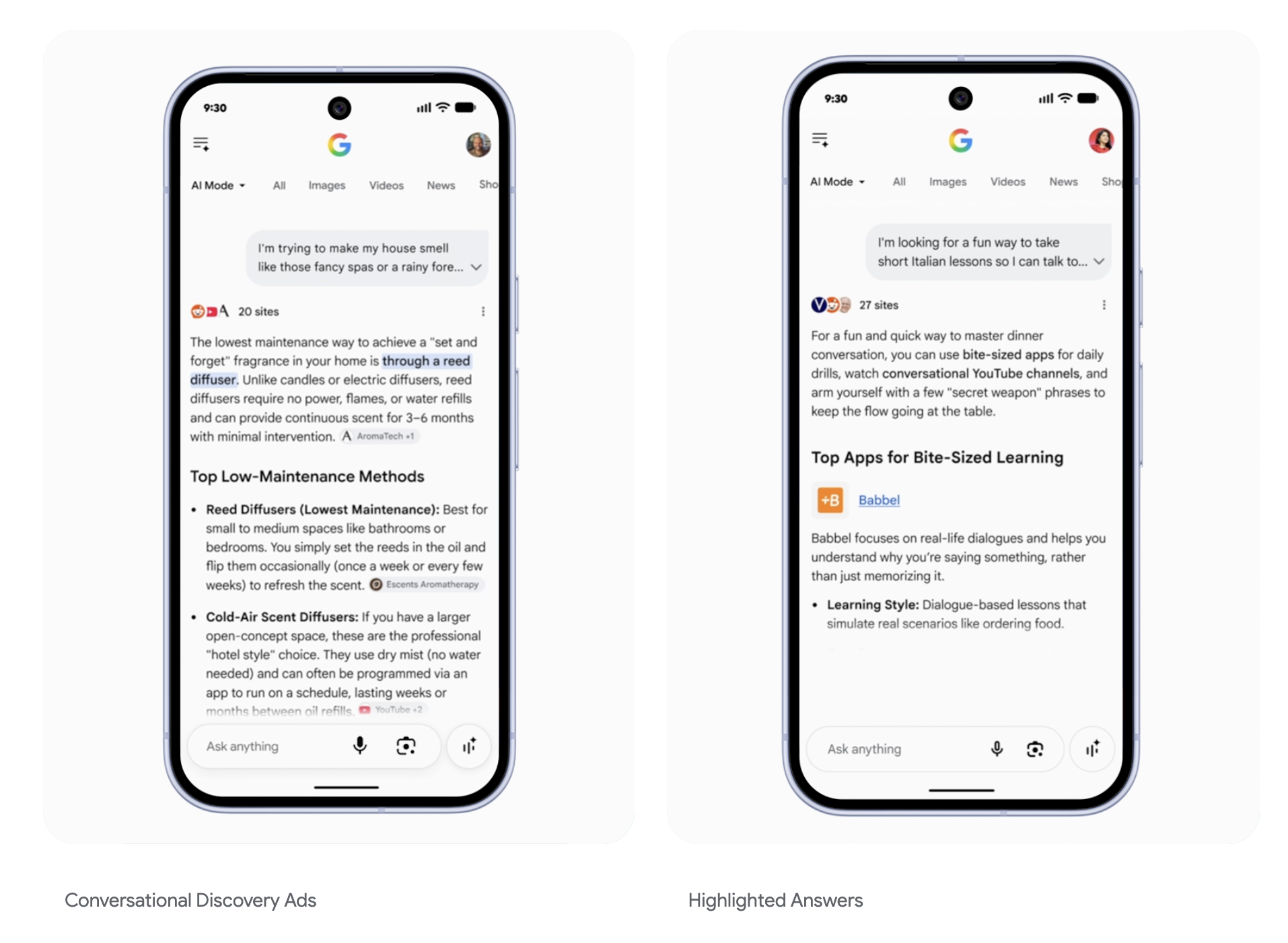
Conversational Discovery Ads
The ad answers the user's specific question. Someone asks how to make their home smell like a spa, and Gemini builds creative tailored to that exact search, surfacing the features that matter to that conversation. Static assets become raw material, not the ad itself.
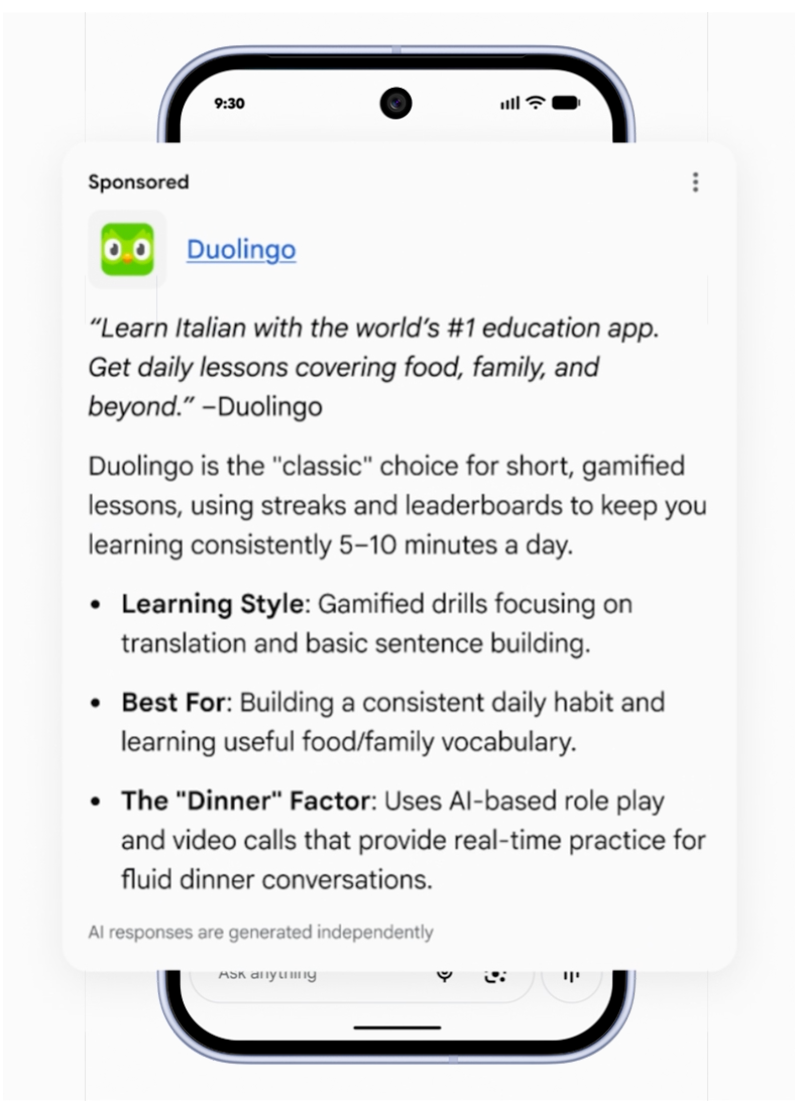
Highlighted Answers.
When AI Mode returns a list of recommendations, a highly relevant, high-quality ad is eligible to appear inside it. Position follows relevance, which moves the design question from where the ad sits to whether it deserves to.
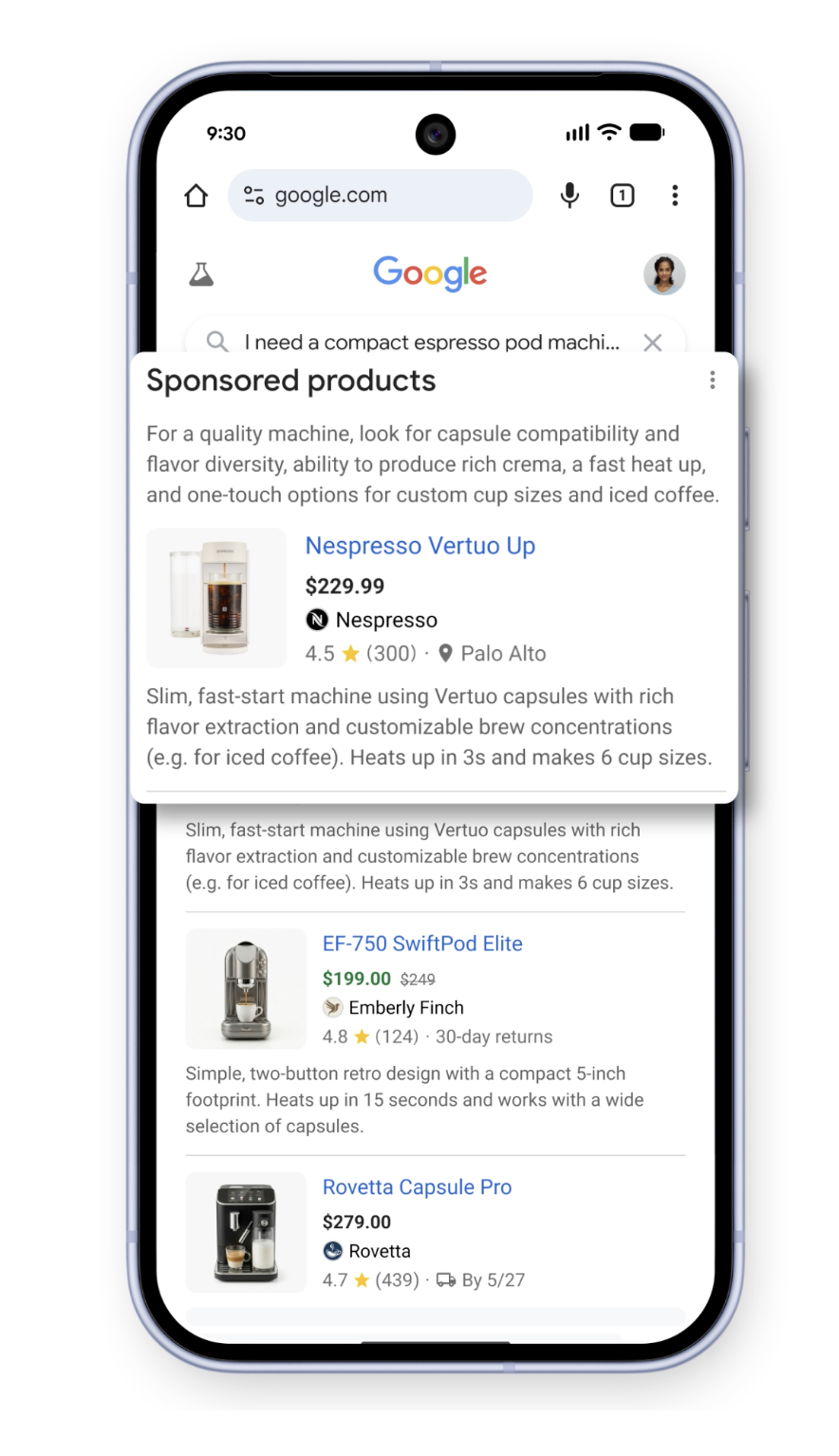
AI-powered Shopping Ads
For considered purchases on core Search, Gemini surfaces a brand's most relevant products and writes a custom explainer for why this one fits this shopper. The explainer, not the banner, becomes the creative unit.
Business Agent for Leads
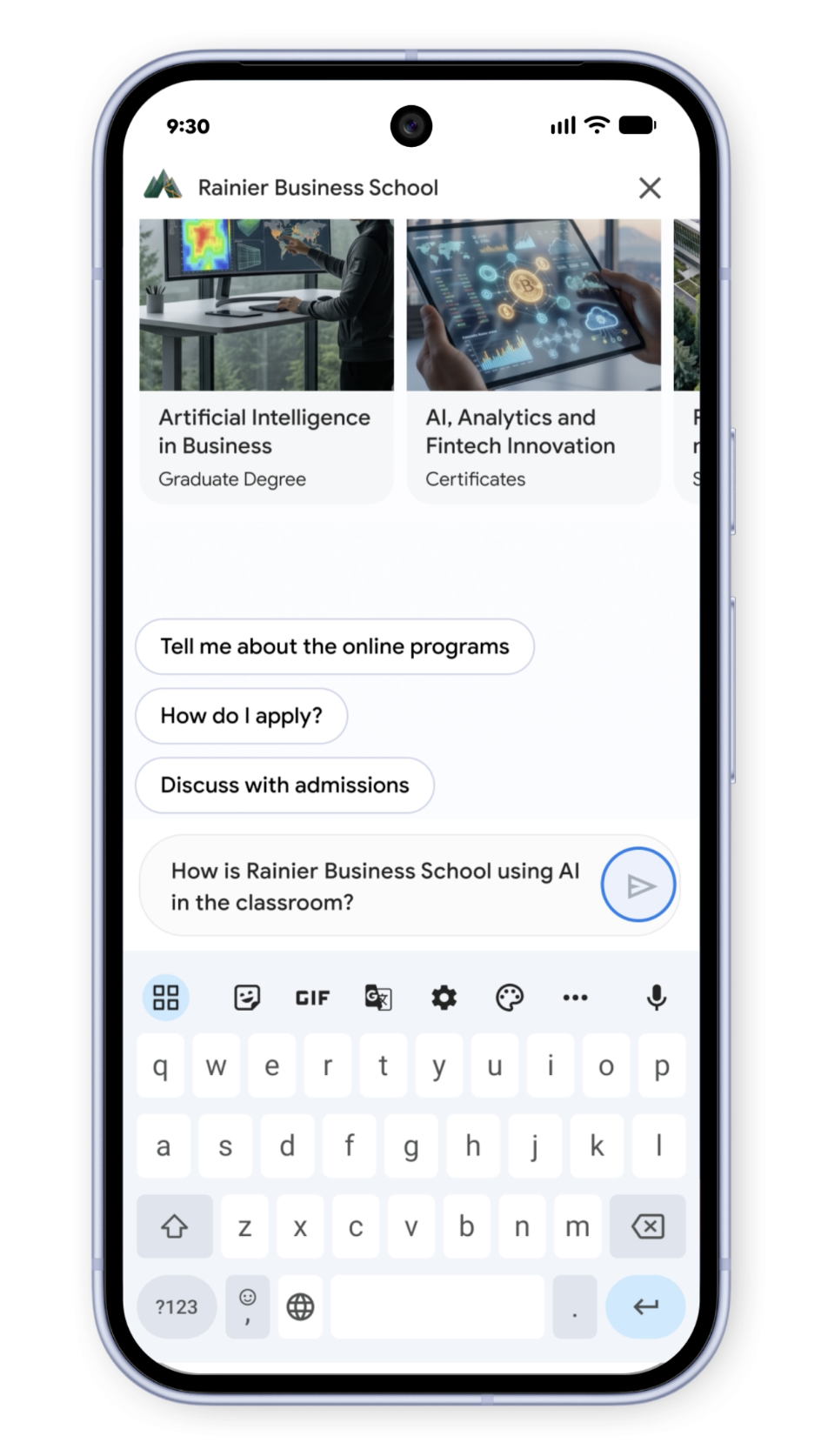
The boldest move of the set: a Gemini-built brand agent living inside the ad itself. Instead of a static lead form, the user chats, and gets instant answers drawn from the advertiser's own site. The ad stops being a message and becomes a conversation partner.
Every one of these formats shares the trust layer: the advertiser's creative paired with an independent, Gemini-written explainer and a persistent Sponsored label. The design bet underneath all of it: transparency is not a tax on persuasion. It's the mechanism that makes persuasion work inside an answer.
Bigger Than One Surface
This isn't a Google story; it's the next chapter of advertising. Every answer engine is converging on the same problem from a different angle: Microsoft has brought ads into Copilot, Perplexity has experimented with sponsored follow-up questions, Amazon has explored ads inside Rufus, and Meta has been open about advertising's role in its assistants. Different products, identical brief: how does a brand participate in a conversation without breaking it?
Which means the grammar being worked out on this surface, relevance as admission, transparency as trust infrastructure, systems as the craft object, is about to become the grammar everywhere attention lives: search, retail media, social, and streaming. The platforms that master it first won't just have better ad formats. They'll have the only ones users allow to stay.
Why this surface matters, in three numbers.
1B+
Monthly AI Mode users, with query volume more than doubling every quarter. This is not an experiment; it is where search behavior is moving.
93%
Of AI Mode sessions end without a click out (reported range 92 to 94 percent). Intent now resolves inside the answer, which changes what advertisers are buying.
75%
Of shoppers say AI Mode helps them make faster, more confident purchase decisions (Google-commissioned Ipsos Global Consumer Journeys survey, Dec 2025, 13,000+ online shoppers across 25 countries).
The budget question every advertiser is asking: if 9 in 10 sessions never leave the answer, what is a click worth, and what is presence inside the answer worth?
"Now, you can ask Google anything, so the best ads must be answers."
— Vidhya Srinivasan, VP and GM, Google Ads and Commerce, Google Marketing Live 2026
What I Carry Forward
Working on this surface has rewritten several of my defaults, and these are the ones I'll carry into everything I design next:
The ad is becoming an answer, and the answer is becoming an agent. On conversational surfaces, relevance stops being a targeting metric and becomes a design material. And the trajectory doesn't stop at answering: with brand agents inside ads and checkout inside the answer, the sponsored unit is evolving from a message into a participant that can converse, advise, and close. The formats that win are the ones users would keep talking to.
Trust is the growth strategy. Clear labeling and independent explainers aren't friction on the business model. They're what makes a generated surface safe to monetize at all.
Design the system, then the screen. When creative is generated per query, craft lives in the rules: the principles, evaluations, and narratives that hold a quality bar no human can hold by hand.
Narrative is a deliverable. On a surface this new, the diagram that aligns a room and the story that explains a format are as much the design work as the format itself.
Setting the Craft Bar
If I were briefing a team tomorrow to design advertising for any conversational surface, the brief would fit on a card. Three directives, in order:
Prototype the conversation, not the screen. A static comp can't tell you whether an ad survives a follow-up question. Build the exchange, then judge the format inside it.
Build the evaluation before the format. Decide what "good" means, write it down as something a rater or a model can score, and only then start generating. A quality bar that lives in one designer's taste doesn't scale; one that lives in the system does.
Write the story that ships it. A format nobody can explain to leadership, sales, or an advertiser doesn't exist yet. The narrative artifact isn't documentation of the design work. It's the half of the design work that makes the other half real.
A New Grammar for Advertising
Every era of advertising has had to learn a new grammar. Print learned the page, broadcast learned the break, search learned the auction. Conversational AI is the next grammar, and it's being written right now, in public, one answer at a time. The direction is unmistakable: the ad is becoming a participant in the conversation, one that answers, advises, and increasingly completes the sale without the user ever leaving. Designing inside it means holding craft, commerce, and trust in the same hand, because on this surface they are no longer separate concerns. They are the same design decision, made over and over, at the scale of a billion questions.
The thinking travels. The confidential parts stay where they belong.